Conference Follow-Up

The Willamette Writers Conference offered The Big Critique for the first time last year and scheduled it for the final afternoon of this year’s conference. Participants submit the first page of a writing project ahead of the conference. Conference staff make copies and writers gather in small groups with an editor or agent to read the pages and share constructive comments.
 
I made heavy edits to the opening page of “Ma’rama, Daimyo’s Daughter” so it would make more sense (I hoped) and sent it in. During the Big Critique participants were assigned to tables, but only two of us out of the 5-6 in our group showed up. We two lonely orphans were sent to other tables, and the afternoon progressed.
 
Benjamin Gorman, co-publisher of Not a Pipe Publishing, was the industry expert at the table where I landed. He is a regular at the conference who has published the books of Willamette Writers members.
 
Lesson One: Fresh eyes reading our pages pointed out we authors didn’t make things as clear as we thought we had. What seems obvious to the writer isn’t necessarily that clear to the reader.
 
Lesson Two: We all had good stories in us. The viewpoints were as varied as a Vietnam vet to a techie Gen Z. All the first pages we read that afternoon piqued our interest.
 
“I want to read this,” Ben Gorman said about my first page.
 
😆
 
OMG! He liked my YA fantasy because it wasn’t the usual medieval European setting.
 
I got Ben’s business card and spent the next couple of weeks revising the first ten pages of the novel in accordance with comments made during the Big Critique. I also drafted and polished a query letter. Per the publisher’s query guidelines, I emailed both with a reminder that the submittal came out of the conference.
 
I’m now revising “Ma’rama, Daimyo’s Daughter” once again. It’s way too long per the usual YA parameters. So far, I’m not having much success downsizing the behemoth.
 
Ben may decide he’s not interested in my novel. That’s okay. Rejection is part of the writing life. But if one publisher wanted to see more, perhaps there is someone else out there who will like it.
 
Meanwhile, I’ll make my revisions and revisit the notes I made for the second book in the duology.

50th Willamette Writers Conference

August 5, 2019 Facebook post

WWC_50th

One of the country’s best writing conferences is held in my own backyard. How great is that? I’ve attended many times and pitched in the past, but in recent years I’ve just attended the workshops because I didn’t feel my draft novels were ready for other eyes (aside from my fabulous First Readers). This year I got brave and submitted the first page of “Marama, Daimyo’s Daughter” for the Big Critique on Sunday afternoon.
The conference has made many changes in format in recent years. I was tempted by Thursday’s master classes and Sunday’s intensives. Maybe next year. But I did splurge on all three days of the main conference, although I didn’t attend the evening offerings because I needed to get home to rescue Indy.
“Turn Your Idea Into a Best Seller” presented by Jeff Goins wasn’t so much how or what to write, but what to consider if your goal is to break out from the crowd of published novels. Goins suggested a good idea for a novel is fine, but an INTERESTING idea is even better. One way to do this is to subvert the expectations of readers. That is, give them something familiar — with a twist. For example, “Hunger Games” is a story about gladiators (familiar) but in the future with teenagers (twist).
Scott Myers presented “The Protagonist’s Journey” in two parts. He boiled down the traditional three-act story arc into something easy to grasp. Act I, the protagonist is in a state of disunity, just not in sync with the existing situation. Act II, the protagonist undergoes deconstruction following the inciting incident and then reconstruction in the second half of the act. Act III, the protagonist attains synthesis/unity. The second half of Myers’ workshop addressed the primary archetypal characters that go on the “journey.” They include the protagonist, nemesis, attractor, mentor, and trickster.
I also attended Myers’ workshop “Pixar and the Craft of Storytelling.” Basically, Pixar does a lot (a LOT) of preliminary work to develop their stories. Basically it boils down to beginning with character, and telling a story from the heart. The character-driven narrative dynamics of Pixar stories include: a special subculture, sires & siblings, separation, strange sojourners, and sentiment.
Melissa Hart’s workshop “10 Tips for Integrating Diversity into MG/YA” addressed not only racial and ethnic diversity, but also considered body image, economic status, physical & mental capabilities, gender (and gender identity), etc. She suggested MG/YA novels to read with characters facing these various challenges.
Of course I had to attend one of Hallie Ephron’s workshops. “Plotting a Mystery Novel: The Secret’s in the Secrets.” Took me awhile, but I recently figured out that the various suspects in mysteries are all covering up something, not necessarily the crime under investigation. Ephron’s workshop clarified my lightbulb moment. She told us each character’s secret establishes why they do what they do, and these secrets are the “red herrings” that conceal the Big Secret at the center of the story.
I think most of us walk away from the conference in a daze, our minds jam packed with information. Those who experienced a successful pitch likely float home. We reap the efforts of the many volunteers who made the conference possible. Also, kudos to the staff of the Sheraton Portland Airport Hotel that has hosted the conference for many years.
I’ll save my experience with the Big Critique for another post.

Conference Critique

July 21, 2019 Facebook post

First page make or break!
I once again registered to attend the major writing conference in our own backyard. This year I signed up for the “Big Critique” where attendees submit the first page of a project and sit around a table with a pro and other writers in the same genre to discuss our submissions.
I decided to use “Marama, Daimyo’s Daughter” which I haven’t looked at for awhile.
How to squeeze pertinent information onto the first page?! Cut, cut, cut!
Fortunately, having set it aside for awhile, it was easier to delete anything that might slow down the reader. Still, I feel like I had to eliminate some information that would help with establishing the fantasy setting.
It was an excellent exercise in focusing on what’s relevant. Grab the reader’s attention, pique her interest, establish the genre, introduce the protagonist and show what makes her someone interesting to follow.
Did my best, held my breath, and submitted my page.
We’ll see how I well I did in a few weeks.

“Divided Heritage”

June 22, 2019 Facebook post

The 2009 draft YA fantasy novel, working title “Legacy,” is now 2019’s “Divided Heritage.” The setting has changed, so I’m forced to redraw my fantasy world map. Likewise, I had to rename a certain set of characters to reflect the change in venue. Fortunately, the majority of characters and place names can remain the same.
I’ve also selected new inspirational pictures for the cast, although one of the originals surprised me and is still perfect.
I have First Reader Emily’s helpful suggestions, and “Save the Cat! Writes a Novel” for a structure guide.
I’m adding details, rearranging scenes, and trying to insert scenes that flesh out the protagonist’s world without slowing down the action.
Writing is an adventure. Sometimes it bogs down, and other times surprising ideas and solutions pop up. But it keeps me out of trouble and the vacuum cleaner idle.

Discovery

June 4, 2019 Facebook post

As I’ve already posted, I’m going back through old drafts of novels to capture elements to avoid “reinventing the wheel.” I’ve developed a system of magic and various races that i’ve described and used in earlier stories. Plus, I’ve forgotten some of the details I created. I’m making cool discoveries of things I’d forgotten about.
I’m also amazed by how good the novels are. Not that they couldn’t use a lot of work. But I’m going through a novel drafted 10 years ago and getting hooked on the story.
Since 2009 I’ve reimagined my generic continent, renamed the realms I created, and come up with variations of the historical background. However, the old story I’m currently working through might be worth salvaging. Same for the unfinished draft novel I reviewed just prior. Polish the story arc and character development and I might actually have a passable novel.
Something to be said for setting aside your work to look at it with fresh eyes. You might be surprised.

Magical Mashup

May 21, 2019 Facebook post

I’m calling it “Magical Mashup.” Rather than reinvent the wheel, I’m going back through draft novels to copy relevant descriptions, partial scenes, and dialogue to paste them into a single reference document.

I have created a hemisphere of various realms that resemble cultures with which we’re familiar. And I’ve developed a system of magic that includes different magical abilities as well as objects imbued with magical powers. But of course in drafting a novel these generic aspects of the world I’ve created acquire details and applications not anticipated when the umbrella world was created.

Most of the material I’m gleaning comes from unfinished projects. As I’m skimming through them, they actually read pretty well. 🤓 I may have to revisit some of my previous efforts to re-plot them. Hmmm.

Anyway, I’m hoping that my mashed up collection of material will help me integrate the characters and storylines from previous efforts into a single worthwhile YA SFF novel.

We’ll see.

Cloudy Thoughts

May 12, 2019 Facebook post

ARGH!

Bits and pieces from various story ideas are floating around in an amorphous cloud of an idea for a novel that I’ve had for some time.

I’ve done research, developed characters, built cultures, and plotted several YA SFF novels in process. Concepts from these efforts seem to want to wander off into a story that incorporates them all. It might be a fun adventure if only I could organize it.

I’ll keep chipping away at it. But in the meantime…argh!

Muddle in the Middle Resolved

April 1, 2019 Facebook post

Muddle-in-the-middle of “The Crystal Sword” has been resolved.

I set the novel aside for a few days, came back to it and figured out a few scenes. They will likely be episodic, but if they can get me to the point where I have a better idea of what comes next, I’ll take them. It’s the first draft, after all.

However, to my surprise, one of the scenes I’m working on may turn out to be rather exciting. Whaddaya know?!

Easily distracted as I am by shiny new ideas — the 💡went off when skimming through a book for setting/milieu ideas for a different story. The novel included a subplot situation that intrigued me and may be right for a new approach to an old idea.

However, must finish “The Crystal Sword.”

Muddle in the Middle

March 16, 2019 Facebook post

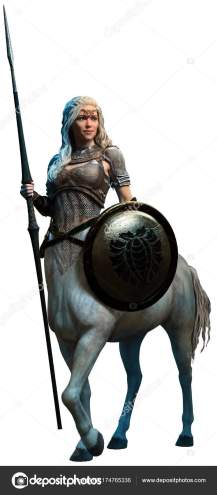
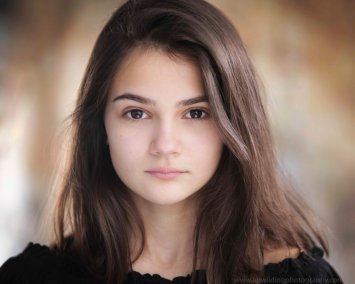
Ack! I’ve hit the muddle-in-the-middle of “The Crystal Sword.” Protagonist Bronya (inspired by the image of actress Lara Decaro) has left her familiar world and is venturing out into the unknown. Antagonist Zivon (actor Mads Mikkelson) wants something Bronya has. But Bronya has friends, such as centauress Akantha, and young Lord Stas (actor Brecklin Meyer).

Something happens, and then something else happens, and then Bronya and her companions….

I know, or pretty much believe I know, what occurs to change everything Bronya believes. She and those who support her take on a new goal that will, of course, lead up to the confrontation with the antagonist. But I’m not quite sure how to get to this point.

Pondering episodes that will challenge Bronya’s old coping methods and misconceptions about who she is. Hmmm.

DYfrDsiXcAA0yp-

images-1

Akantha:depositphotos_174765336-stock-photo-female-centaur-illustration

breckinmeyer


Save the Cat!

February 26, 2019 Facebook post

I’m nearing the end of the set-up in the first draft of “The Crystal Sword.”
Jessica Brody’s book was most helpful by applying the beats of a screenplay to those of a novel.
Pantsers (those who write by the seat of the pants) tend to feel confined by an outline. For them, outlining the beats of the story drains the creativity from the writing process.
I tried writing with only a nominal outline for 2018 NaNoWriMo and it did not work for me.
Using “Save the Cat! Writes a Novel” and notes from conference workshops, I worked out character motivations and relevant backstories. From there I considered what the plot points might look like for the major characters. And then I created 3×5 scene cards.
I’m only 67 pages into the first draft and I’ve already added scenes that I hadn’t pre-planned, plus I added a character that was originally just a walk-on and off.
My novel outlines are more like the driving directions from a map app. The app usually offers alternate routes, and often provides businesses of interest and places to eat near the destination. My outlines guide me toward the intended destination (climactic scene) but allow for detours and stops at local attractions. Writing a novel is almost like reading one. I never quite know where I’ll end up going even though I’m working from scene cards.